🎯 Learning Outcomes
- Identify apparatus used for collecting and preserving specimens.
- Collect and preserve biological specimens using conventional and improvised tools.
- Process plant specimens (Herbarium) and animal specimens safely.
- Appreciate the importance of conservation during collection.
🛠️ Collection Apparatus
Biological specimens are diverse, so we need specialized tools to capture them without damage or danger.
| Apparatus | Use Case | Improvisation Tip |
|---|---|---|
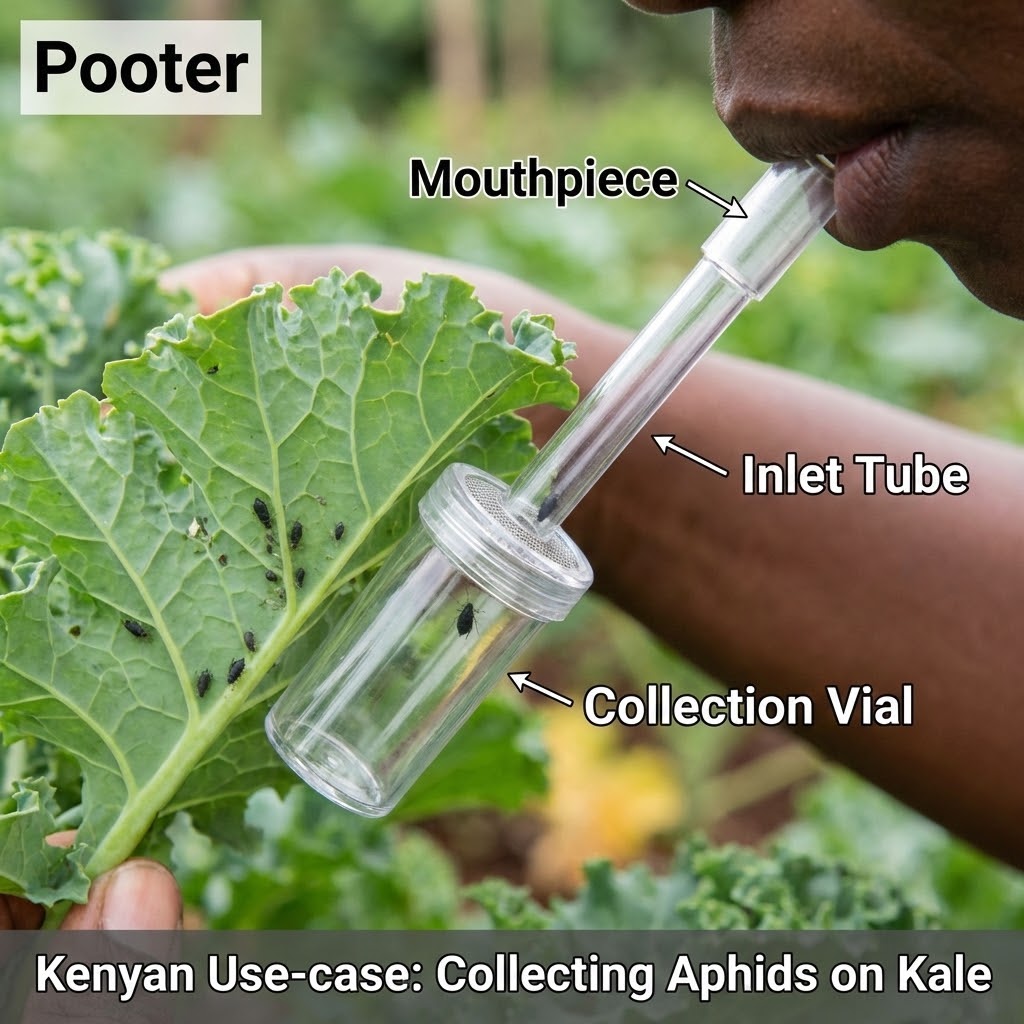
| Pooter (Aspirator) | Sucking up tiny insects from leaves/bark. | Use a plastic jar and two flexible straws. |
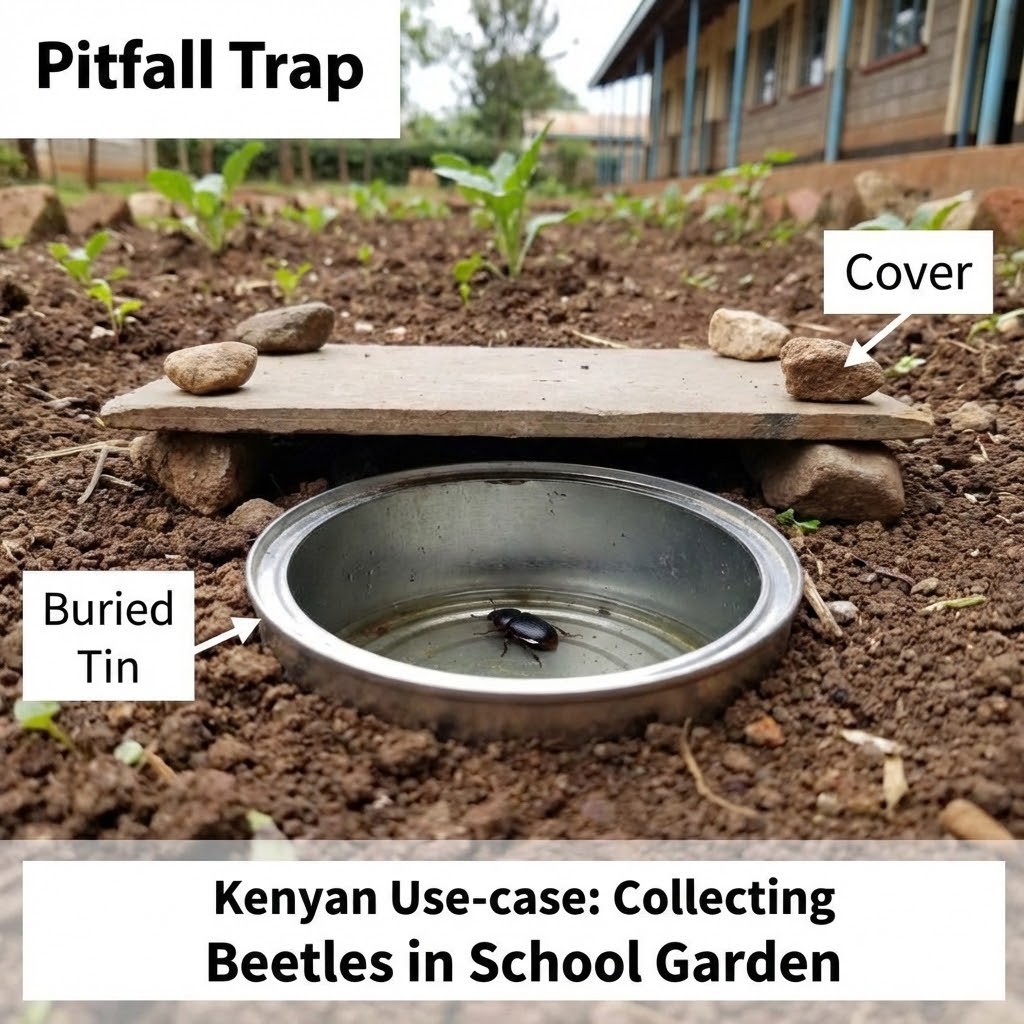
| Pitfall Trap | Catching ground-crawling insects (ants, beetles). | Bury a tin can flush with the ground. |
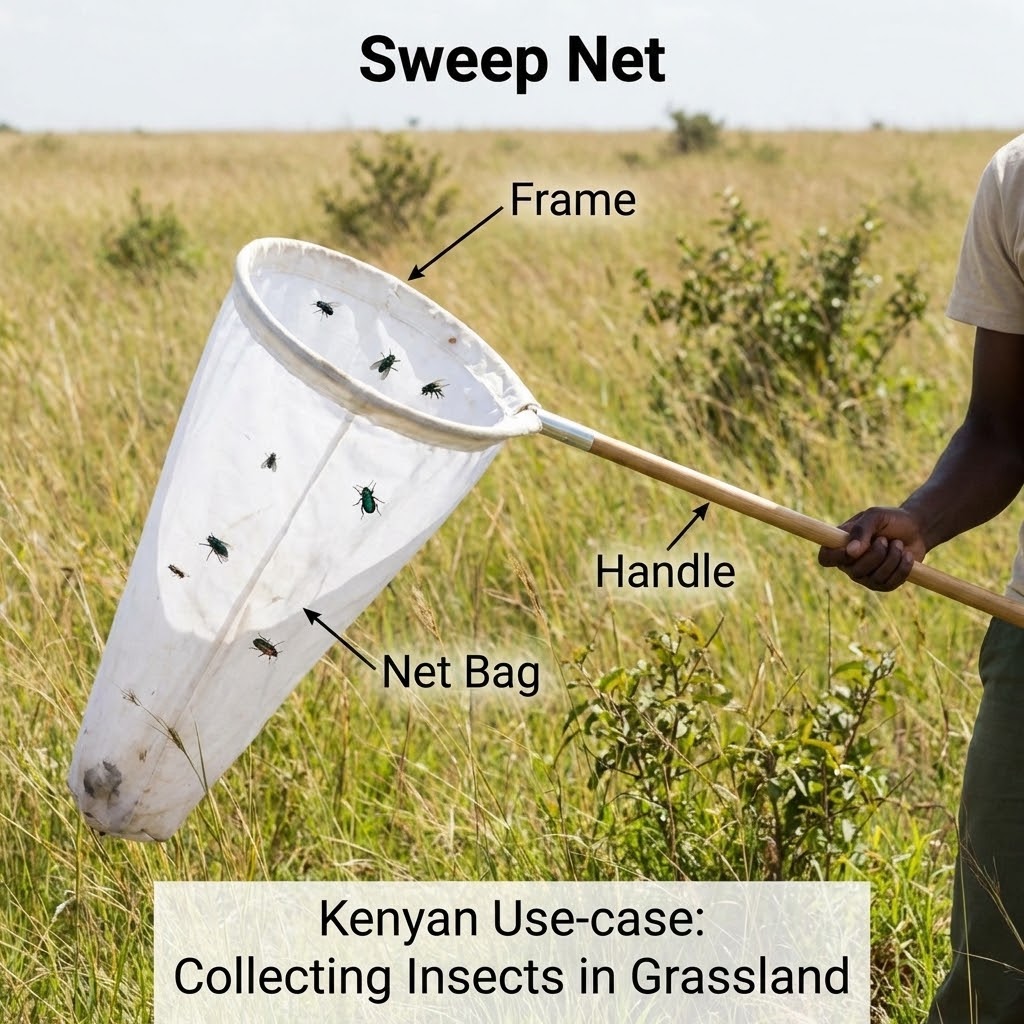
| Sweep Net | Catching flying insects in tall grass. | Use a wire coat hanger and a mesh bag. |
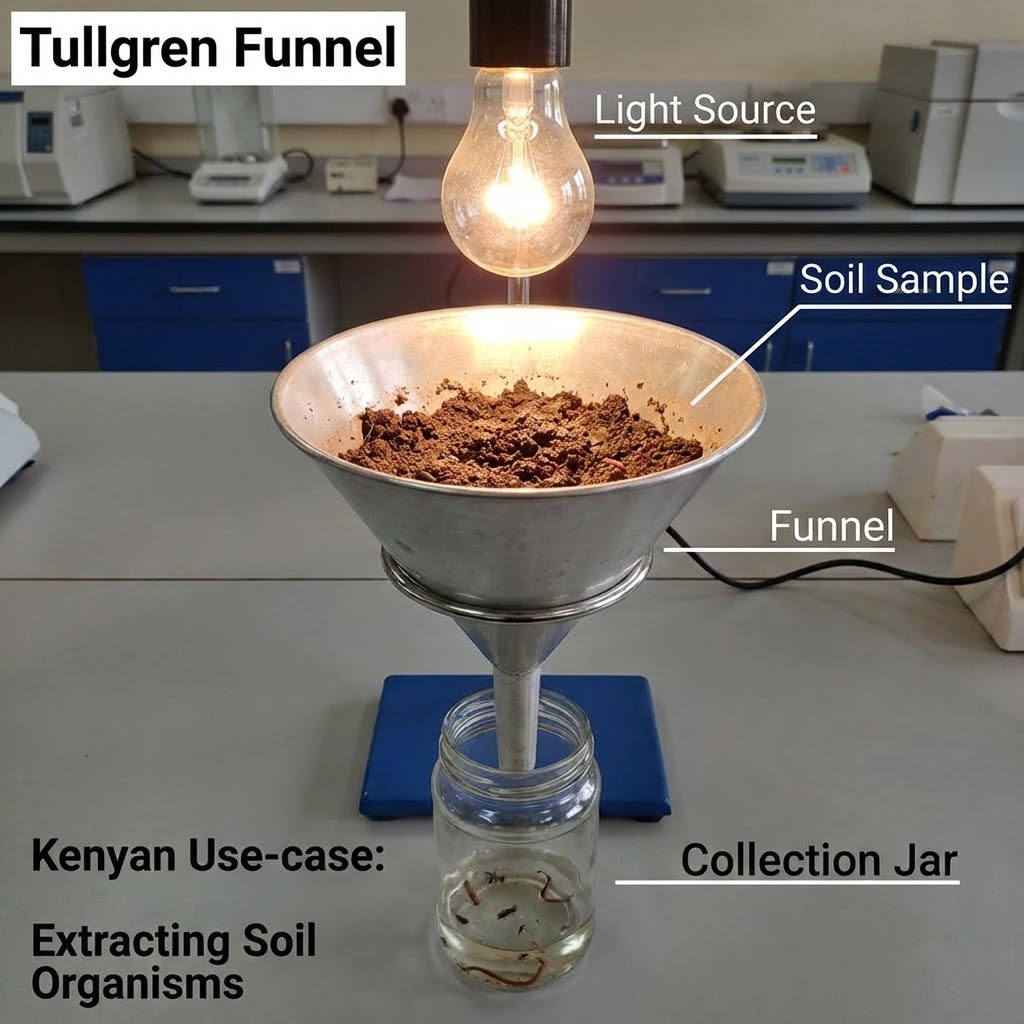
| Tullgren Funnel | Extracting small organisms from soil/litter. | A funnel with a light bulb above it. |
Grade 10 CBE Kenyan Context & Field Tips:
- Pooter: Ideal for collecting aphids on cabbage or ants on acacia — very common in school compounds and farms.
- Pitfall trap: Excellent for ground beetles, crickets, spiders in school garden or grassland — check traps daily to avoid killing specimens.
- Sweep net: Used in tall grass or maize fields to catch grasshoppers, butterflies — sweep gently to avoid damaging wings.
- Tullgren funnel: Great for soil mites, springtails from leaf litter — place near a bulb (heat drives organisms down into alcohol).
- Safety & ethics: Wear gloves, avoid harmful insects (e.g., bees, wasps), collect only what is needed, return habitat to original state, never collect from protected areas (e.g., national parks without permit).
- Misconception to correct: "More specimens = better project" — no, quality (clear labels, good condition, ethical collection) matters more than quantity.
🌿 Preservation Techniques
1. Plant Preservation (Herbarium)
Processes: Pressing, Drying, Mounting, Labeling.
Note: Labels must include local name, scientific name, date, and locality.
Processes: Pressing, Drying, Mounting, Labeling.
Note: Labels must include local name, scientific name, date, and locality.
2. Animal Preservation
Processes: Sorting, Ethanol (Wet), Mounting (Dry).
Note: 70% Ethanol is a common preservative for "wet" specimens.
Processes: Sorting, Ethanol (Wet), Mounting (Dry).
Note: 70% Ethanol is a common preservative for "wet" specimens.
Grade 10 CBE Kenyan Practical Guidelines & Safety:
- Herbarium method: Collect leaves/flowers (e.g., maize, beans, aloe) → press between newspaper/cardboard under heavy books → dry 5–10 days → mount on A4 card with glue/tape strips → label (scientific name, local name, collector, date, GPS/location if possible).
- Wet preservation: Insects (grasshoppers, butterflies) → kill humanely (ethyl acetate jar) → store in 70% ethanol (or isopropyl alcohol) in sealed bottles → label clearly.
- Safety: Use gloves when handling ethanol (flammable, irritant), work in ventilated area, never ingest preservatives, dispose waste according to school/lab rules (not in sink).
- Conservation note: Collect only 1–3 specimens per species, avoid rare/endangered plants (e.g., orchids), never collect in protected areas without permission (KWS/KFS guidelines).
- Misconception to correct: "Preserved specimens last forever" — no, they degrade over time; proper drying (plants) or correct alcohol concentration (animals) is essential to prevent mould/fading.
📊 Project: Specimen Management
As a senior learner, your project involves Financial Literacy. You must plan effectively:
- Budgeting: Estimating costs for preservatives (ethanol), mounting boards, or gloves.
- Planning: Mapping out collection sites to minimize travel costs.
- Portfolio: Documenting progress, safety measures taken, and expenses incurred.
Grade 10 CBE Kenyan Project Tips & Extension:
- Low-cost ideas: Use recycled cardboard for mounting, newspaper for pressing, local ethanol (spirit) diluted to ~70%, collect from school garden/compound → reduces cost.
- Documentation: Create a project portfolio — photos of collection, drying, mounting; list scientific + local names (e.g., "Maize — Mahindi"); calculate total cost (KES).
- Conservation link: Discuss how over-collection harms biodiversity (e.g., rare orchids in Kakamega Forest) → promote digital collection (photos + GPS) as alternative.
- Real-world value: Herbarium specimens used in Kenyan universities (UoN, Kenyatta) for research; helps track plant distribution and climate change effects.
❓ Inquiry Question
"How are specimens collected and preserved?"
Answer: Collection is done using tools like sweep nets or pitfall traps based on the habitat. Preservation is achieved by removing moisture (drying/pressing) or using chemical preservatives (ethanol) to stop decay.
Answer: Collection is done using tools like sweep nets or pitfall traps based on the habitat. Preservation is achieved by removing moisture (drying/pressing) or using chemical preservatives (ethanol) to stop decay.
🧩 Knowledge Check
1. Which apparatus is best suited for collecting small insects crawling on the ground?
2. In a Herbarium, what is the process of fixing a dried plant to a heavy sheet of paper called?